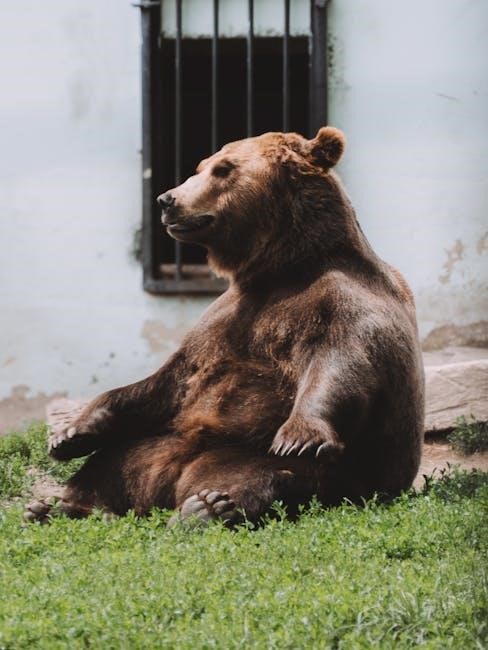
Brown Bear (Ursus arctos) ౼ A Comprehensive Overview
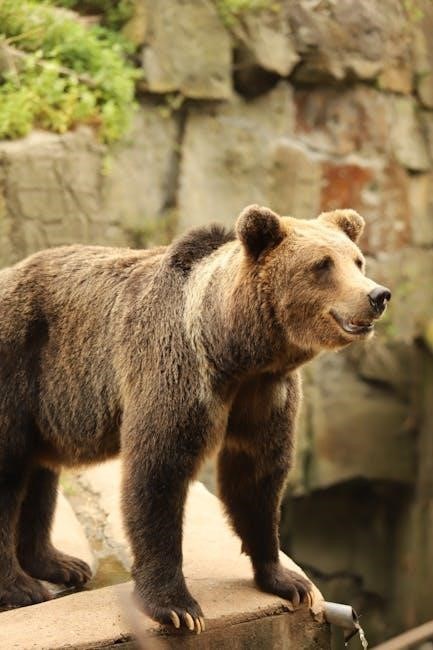
This overview details the majestic brown bear (Ursus arctos), encompassing its global population exceeding 200,000, conservation status, and ongoing research efforts.
The brown bear (Ursus arctos) is a large mammal, a powerful predator, and an integral component of numerous ecosystems across the globe. Renowned for its imposing size and adaptability, this species exhibits considerable variation in color and stature depending on geographic location and food availability. Historically, brown bears occupied a much wider range than they do today, inhabiting vast stretches of North America, Europe, and Asia.
Currently, their populations are fragmented, facing pressures from habitat loss, human-wildlife conflict, and historical overhunting. Despite these challenges, the global population is estimated to exceed 200,000 individuals, though numbers vary significantly by region. Understanding the brown bear’s ecology, behavior, and conservation status is crucial for ensuring its long-term survival and maintaining the health of the ecosystems it inhabits. This overview will delve into these aspects, providing a comprehensive understanding of this iconic species.
Taxonomy and Classification
The brown bear, scientifically designated as Ursus arctos, belongs to the family Ursidae, which encompasses all eight extant species of bears. Within this family, Ursus arctos is further categorized into numerous subspecies, reflecting regional variations in size, morphology, and genetics. These subspecies include the Grizzly bear (Ursus arctos horribilis) of North America, the Kodiak bear (Ursus arctos middendorffi) inhabiting the Kodiak Archipelago, and the Eurasian brown bear found throughout Europe and Asia.
The taxonomic classification places the brown bear within the order Carnivora, although its diet is notably omnivorous. This classification reflects its evolutionary lineage and shared characteristics with other carnivores. Understanding this taxonomic framework is essential for studying the bear’s evolutionary history, genetic diversity, and relationships with other species, aiding in effective conservation strategies.
Global Population Estimates (as of 2017)
As of 2017, the global brown bear (Ursus arctos) population was estimated to exceed 200,000 individuals, demonstrating its relative abundance compared to other bear species. However, this number is unevenly distributed across its historical range. Russia harbors the largest population, exceeding 100,000 bears, reflecting the vastness of its suitable habitat. North America, specifically the United States, supports approximately 33,000 brown bears, with over 500 residing in and around Yellowstone National Park.
Canada’s population is estimated at 25,000, while Europe holds a smaller population of around 15,400, often fragmented into smaller, isolated groups, including those in Hokkaido, Japan. These figures highlight regional variations and the importance of localized conservation efforts to ensure the long-term viability of brown bear populations worldwide.
Russia ౼ Population Numbers
Russia stands as a critical stronghold for the brown bear (Ursus arctos), boasting a population exceeding 100,000 individuals as of 2017 estimates. This substantial number is attributed to the country’s expansive and largely undisturbed wilderness areas, particularly in the Siberian and Far Eastern regions. These vast landscapes provide ample habitat, supporting a diverse range of prey species crucial for bear sustenance.
While precise regional breakdowns within Russia are challenging to obtain, the overall population remains relatively stable, though subject to localized pressures from habitat loss and human-wildlife conflict. Continued monitoring and conservation initiatives are vital to maintain this significant population and ensure the long-term health of the species within Russia’s borders.
United States ౼ Population Numbers
The United States harbors an estimated 33,000 brown bears (Ursus arctos) as of 2017, with a significant concentration within Alaska. This state alone supports the vast majority of the U.S. population, benefiting from its extensive, relatively pristine wilderness. A notable subpopulation, exceeding 500 individuals, resides in and around Yellowstone National Park, representing a crucial component of the species’ presence in the lower 48 states.
Populations also exist in Montana, Wyoming, Idaho, and Washington, though these are generally smaller and more fragmented. Conservation efforts, including habitat protection and careful management of human-bear interactions, are essential for maintaining these populations and fostering their continued recovery.
Canada ౼ Population Numbers
Canada is home to approximately 25,000 brown bears (Ursus arctos), distributed across western and northern regions of the country. British Columbia holds the largest Canadian population, benefiting from its vast coastal rainforests and mountainous interior. Significant populations also exist in Alberta, Yukon, and the Northwest Territories, reflecting the species’ adaptability to diverse environments.
These bears occupy a range of habitats, from coastal areas rich in salmon to inland forests providing berries and other forage. Effective wildlife management strategies, including regulated hunting and habitat preservation, are crucial for sustaining these populations and mitigating potential conflicts with human activities. Conservation remains a priority.
Europe ― Population Numbers
Europe’s brown bear (Ursus arctos) population is estimated at around 15,400 individuals as of 2017, representing a remarkable recovery from historical declines. These bears are fragmented into several smaller, isolated populations, primarily concentrated in mountainous regions; Significant populations reside in the Carpathian Mountains (Romania, Slovakia, Poland), the Balkans (Slovenia, Croatia, Bosnia and Herzegovina), and Scandinavia (Sweden, Norway, Finland).
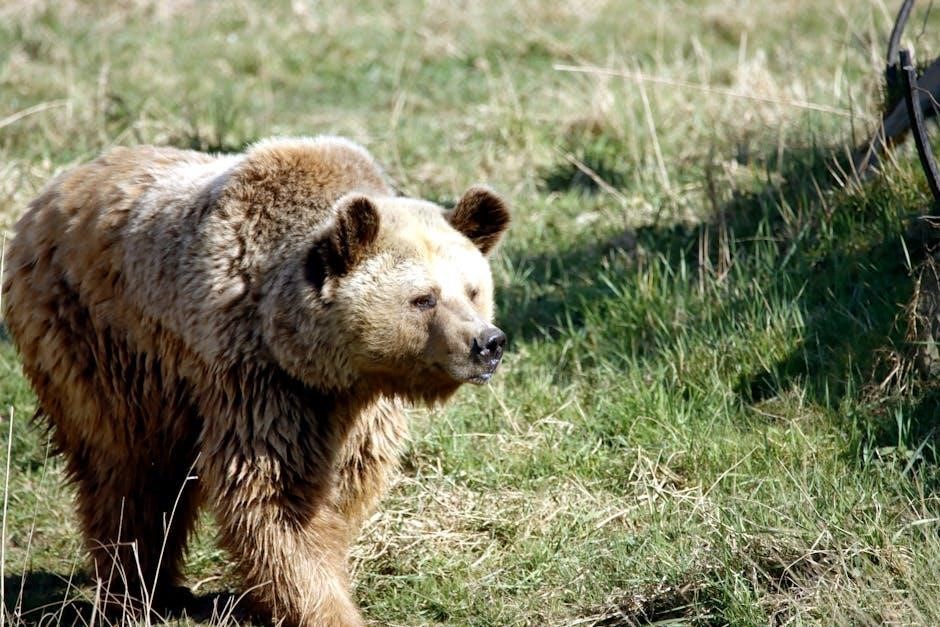
Historically, brown bears were widespread across Europe, but habitat loss and persecution led to significant reductions. Current conservation efforts focus on connecting fragmented populations, mitigating human-wildlife conflict, and protecting crucial habitats. Continued monitoring and international cooperation are vital for the long-term survival of these European bears.
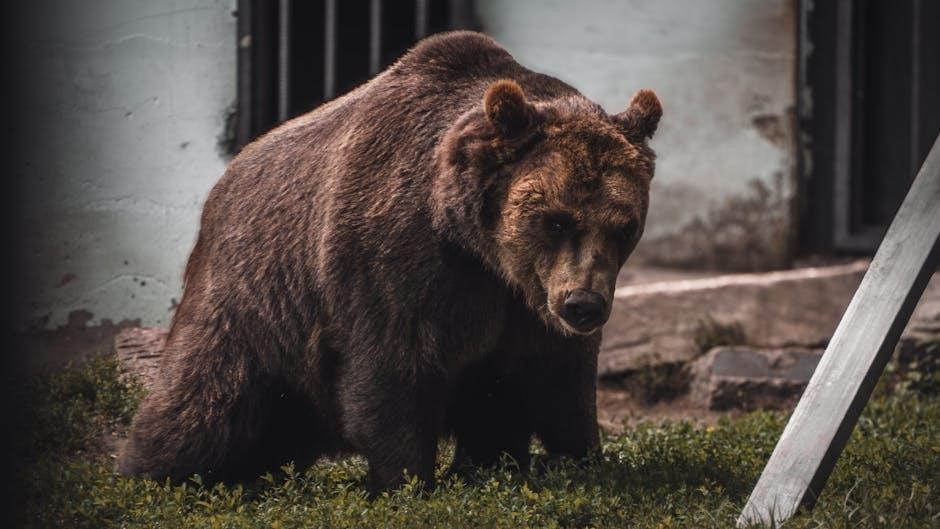
Conservation Status ౼ IUCN Red List
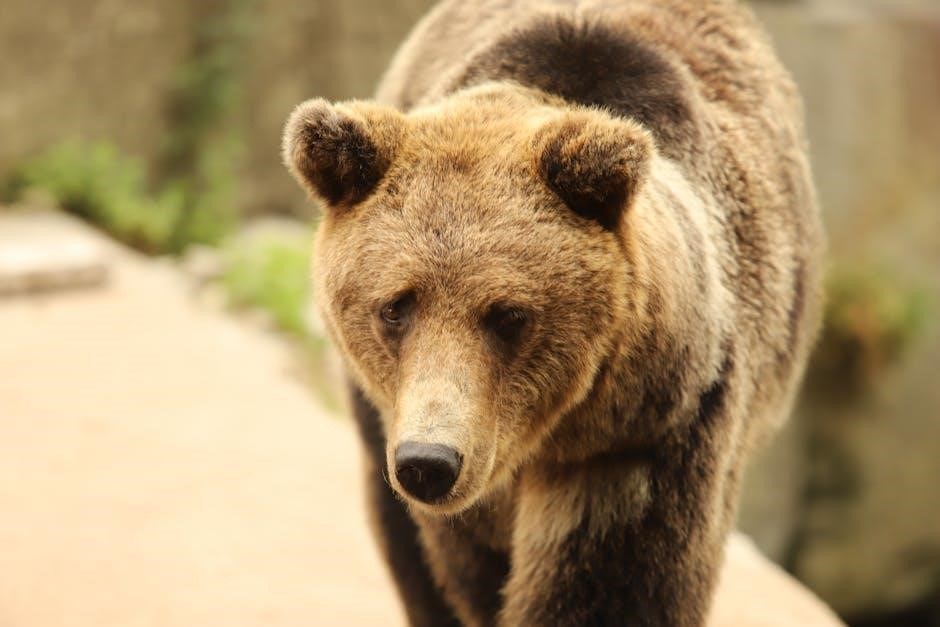
The International Union for Conservation of Nature (IUCN) Red List currently lists the brown bear (Ursus arctos) as a species of “Least Concern.” This classification, established in 1964, reflects a global population exceeding 200,000 individuals. However, this overall status masks significant regional variations and ongoing threats.
While the global population appears stable, many subpopulations face considerable challenges, including habitat fragmentation, human-wildlife conflict, and poaching. The IUCN Red List serves as a crucial resource, providing comprehensive information on the conservation status of species worldwide. Regular assessments and data analysis are essential for adapting conservation strategies and ensuring the long-term viability of brown bear populations across their range.
Historical Range and Current Distribution
Historically, brown bears possessed an incredibly expansive range, stretching across much of North America, Europe, and Asia. Their distribution once encompassed vast areas, from the Arctic regions to the Mediterranean basin and across the entirety of Russia. However, over centuries, this range has dramatically contracted due to human activities, including habitat destruction, hunting, and persecution.
Currently, brown bear populations are concentrated in specific regions. Significant populations remain in Russia (over 100,000), the United States (approximately 33,000, including those in Yellowstone), Canada (around 25,000), and Europe (roughly 15,400). Smaller, isolated populations also exist in areas like Hokkaido, Japan. Continued monitoring of distribution is vital for effective conservation.
Physical Characteristics of Brown Bears
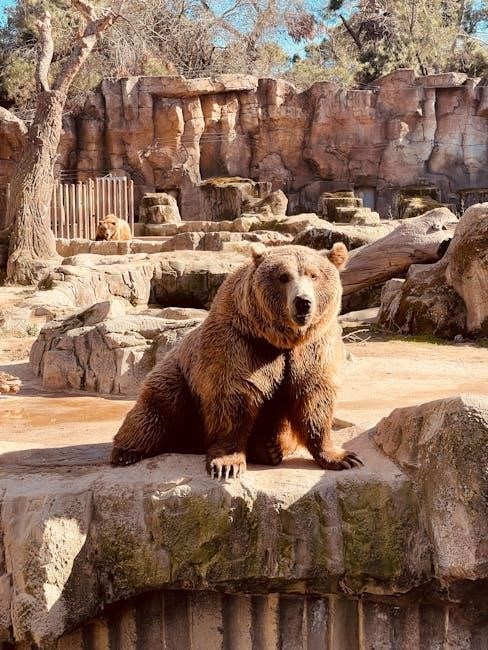
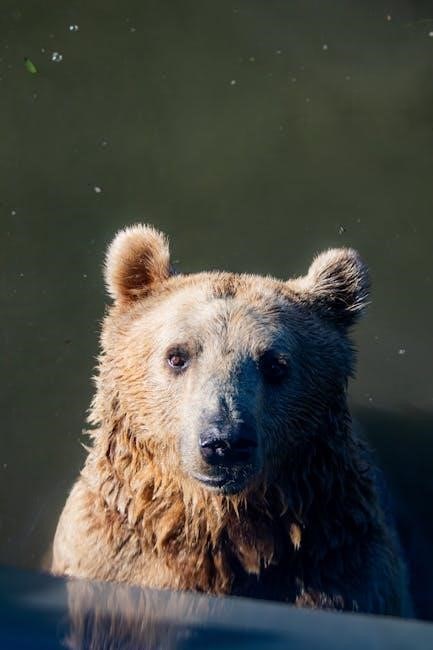
Brown bears are imposing mammals, exhibiting considerable size and physical strength. They display significant variation in size depending on geographic location and diet. Generally, they possess a robust build with a large head, rounded ears, and a relatively short tail. Their fur color ranges from light cream to dark brown, sometimes almost black.
Adult males typically weigh between 180-360 kg (397-794 lbs), while females are smaller, averaging 90-180 kg (198-397 lbs). They have powerful muscles, particularly in their forelimbs, and long, non-retractable claws adapted for digging. These claws are crucial for foraging and defense. Their sense of smell is exceptionally acute, aiding in locating food sources over vast distances.
Diet and Foraging Behavior
Brown bears are opportunistic omnivores, exhibiting a highly adaptable diet based on seasonal availability. Their foraging behavior is characterized by flexibility, consuming a wide range of foods including berries, roots, fungi, insects, fish, and mammals. In areas with salmon runs, fish become a crucial component of their diet, providing essential fats for winter preparation.
They actively forage by digging for roots and insects, overturning rocks, and raiding beehives. Bears also scavenge on carrion and occasionally prey on ungulates like deer or elk, particularly young or weakened individuals. Their powerful claws and strong jaws enable them to access diverse food sources. They accumulate substantial fat reserves during periods of abundance to sustain them through hibernation.
Brown Bear Habitat
Brown bears demonstrate remarkable adaptability, inhabiting a diverse array of ecosystems across North America, Europe, and Asia. Historically, their range was far more extensive, but habitat loss and human encroachment have fragmented populations. They thrive in forests, including coniferous, deciduous, and mixed woodlands, providing cover and food resources.
Brown bears also utilize alpine meadows, grasslands, and coastal areas. Proximity to salmon-rich rivers is particularly crucial for many populations, supporting their dietary needs. They require large, relatively undisturbed territories to roam and forage effectively. Habitat quality directly impacts bear density and reproductive success, emphasizing the importance of conservation efforts focused on preserving and restoring suitable environments.
Reproduction and Life Cycle
Brown bear reproduction is a relatively slow process, contributing to their vulnerability. Females typically reach sexual maturity between four and seven years of age. Mating occurs in the spring or early summer, with a delayed implantation of the fertilized egg. This allows the female to assess her body condition before committing to pregnancy.
Gestation lasts approximately six to eight months, resulting in a litter of one to three cubs born during winter denning. Cubs remain with their mother for two to three years, learning essential survival skills. Brown bears have a lifespan of 20-30 years in the wild, though some individuals may live longer. Their slow reproductive rate makes population recovery challenging.
Human-Bear Interactions
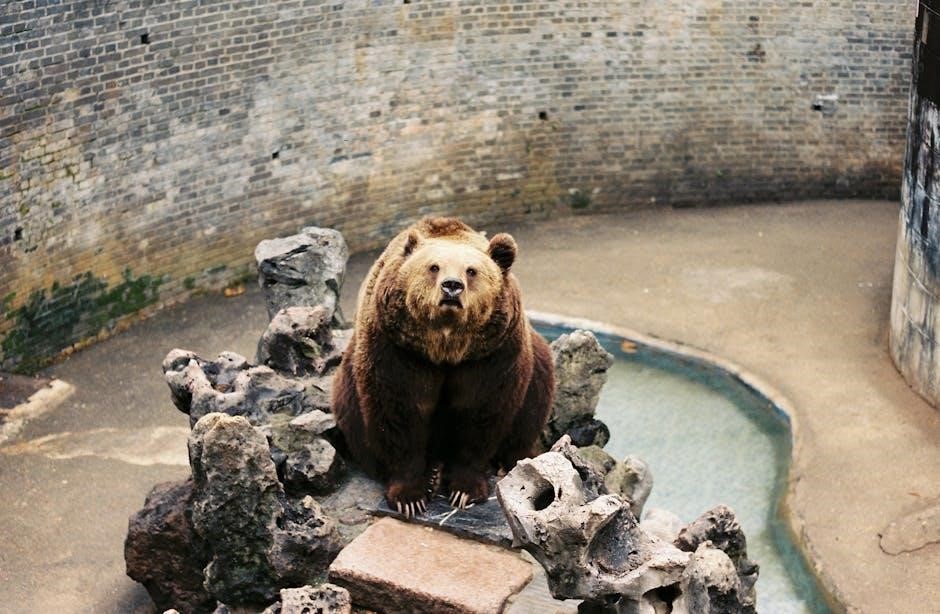
Coexistence between humans and brown bears presents ongoing challenges, requiring careful management strategies. While generally shy and avoiding human contact, bears may be attracted to areas with accessible food sources, such as garbage or improperly stored food. This can lead to habituation and increased risk of encounters.
Although widely reported, attacks on humans are statistically rare. However, they can occur, particularly when a bear feels threatened, is protecting cubs, or is defending a food source. Responsible behavior in bear country includes storing food securely, making noise while hiking, and carrying bear spray. Education and preventative measures are crucial for minimizing conflict and ensuring both human and bear safety.
Frequency of Attacks on Humans
Documented instances of brown bear attacks on humans remain relatively infrequent, despite widespread public concern and media coverage. Statistical analysis reveals that the probability of being attacked by a brown bear is quite low, particularly when compared to other wildlife-related risks. However, the potential for serious injury or fatality necessitates proactive safety measures.
Most attacks stem from surprise encounters, defensive reactions by a mother bear protecting her cubs, or bears defending a food cache. Attacks are more common in areas with high human activity and bear populations. Understanding bear behavior and practicing preventative measures—like proper food storage and carrying bear spray—significantly reduces the risk of a negative interaction.
Threats to Brown Bear Populations
Despite being currently listed as a species of “Least Concern” by the IUCN, brown bear populations face numerous ongoing threats that necessitate continued conservation efforts. Habitat loss and fragmentation, driven by human development, resource extraction, and agricultural expansion, remain primary concerns, restricting bear movement and access to vital resources.
Climate change also poses a significant challenge, impacting food availability through altered vegetation patterns and prey distribution. Human-caused mortality, including legal hunting (where permitted) and illegal poaching, continues to affect certain populations. Increasing human-bear conflict, often stemming from attractants like improperly stored food, also leads to bear removals and mortality. Addressing these interconnected threats is crucial for ensuring the long-term viability of brown bear populations.
Conservation Efforts and Organizations
Numerous organizations are dedicated to the conservation of brown bears and their habitats, employing diverse strategies to mitigate threats and promote population recovery. Bear Trust International actively works to conserve all eight species of wild bears, focusing on habitat preservation and fostering coexistence between humans and bears.
These efforts include research initiatives, community outreach programs, and advocating for responsible land management practices. The IUCN Red List provides a comprehensive resource for assessing conservation status and guiding conservation priorities. Furthermore, educational programs, like those offered by Bear Trust, aim to build awareness and promote STEM education related to bear conservation. Collaborative efforts between governmental agencies, NGOs, and local communities are essential for effective long-term conservation success.
Bear Trust International’s Role
Bear Trust International plays a pivotal role in brown bear conservation through a multifaceted approach centered on habitat protection and community engagement. The organization actively works to conserve all eight species of wild bears, recognizing the interconnectedness of ecosystems and the importance of biodiversity.
A core component of their strategy involves reinforcing ecosystem viability by safeguarding critical bear habitats. Beyond direct conservation, Bear Trust invests in free STEM education lessons for schools, leveraging timely research to cultivate future generations of conservationists. This educational outreach aims to foster a deeper understanding of human-animal coexistence and the importance of responsible environmental stewardship, ultimately contributing to the long-term survival of brown bear populations.
The Impact of Legislation ౼ Food, Conservation, and Energy Act of 2008
The Food, Conservation, and Energy Act of 2008, often referred to as the Farm Bill, indirectly influences brown bear conservation through its broader impact on land management and agricultural practices. While not specifically targeted at bears, the legislation’s provisions concerning habitat conservation programs and agricultural subsidies can affect bear populations and their ecosystems.
Changes in land use resulting from Farm Bill policies can either positively or negatively impact bear habitats. Conservation programs within the Act may provide funding for land easements or restoration projects that benefit bears, while agricultural policies can influence land conversion and fragmentation. Understanding these complex interactions is crucial for maximizing the benefits of legislation for brown bear conservation and mitigating potential adverse effects.
Brown University and Bear Research
Brown University, a leading research institution, fosters academic excellence and contributes to vital conservation studies, though direct, extensive research specifically on brown bears isn’t prominently highlighted in readily available information. However, the university’s broader commitment to environmental studies and STEM education provides a foundation for relevant research.
Brown’s curriculum, offering over 80 programs, encourages interdisciplinary approaches, potentially leading to research projects that indirectly benefit bear conservation. Furthermore, the university’s emphasis on curiosity and intellectual joy aligns with the innovative thinking needed to address complex conservation challenges. Brown’s support for STEM education also empowers future generations to engage in wildlife research and conservation efforts, contributing to long-term bear protection.
The IUCN Red List ― A Comprehensive Resource
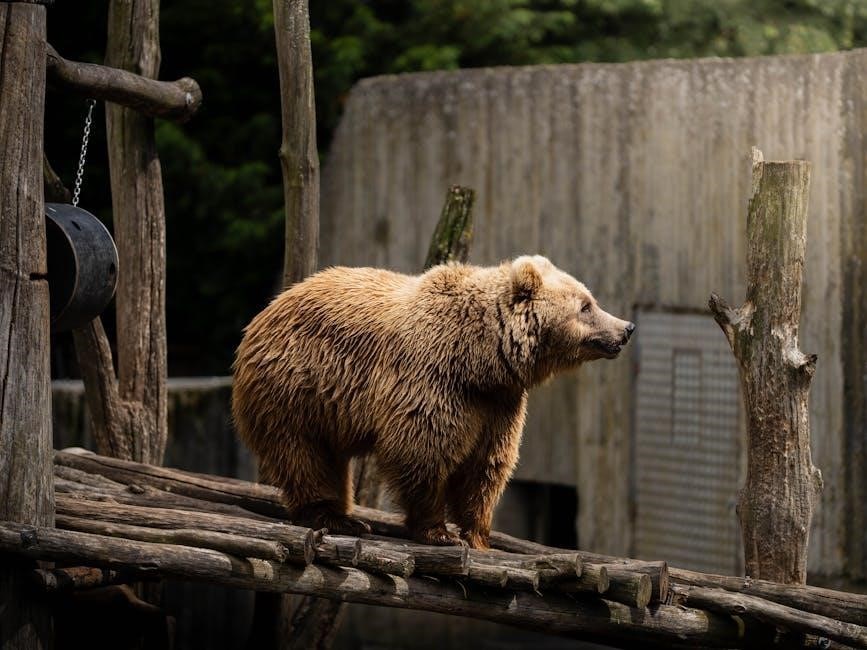
Established in 1964, the IUCN Red List of Threatened Species stands as the world’s most comprehensive source of information regarding the global conservation status of plant, fungi, and animal species, including the brown bear (Ursus arctos). Currently, the brown bear is listed as “Least Concern,” despite facing localized extinctions and range reductions.
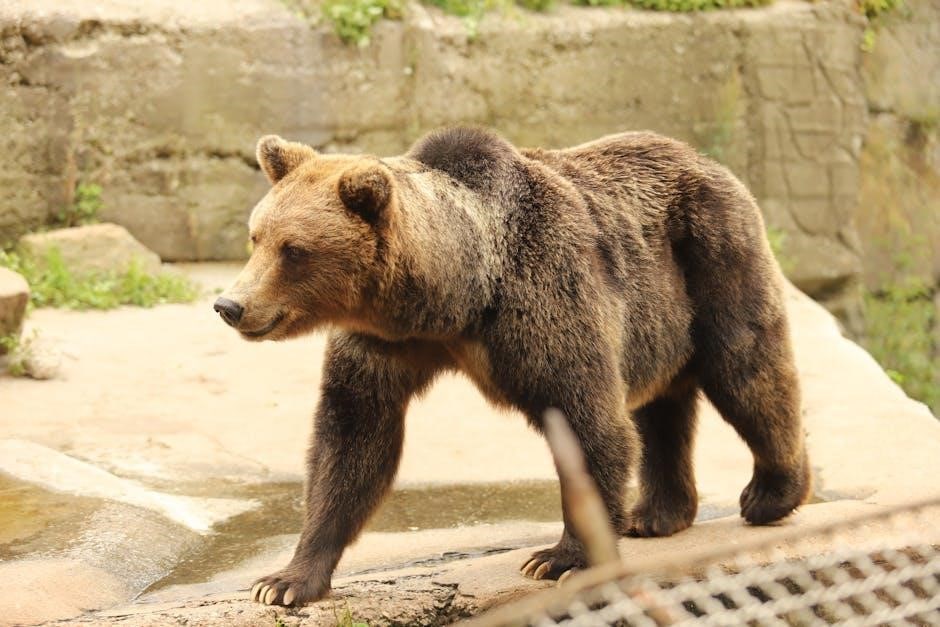
This classification reflects a global population exceeding 200,000 individuals as of 2017, though regional numbers vary significantly. The Red List provides crucial data for conservation planning, tracking population trends, and identifying key threats. It’s a dynamic resource, regularly updated with new assessments, ensuring informed decision-making for bear conservation globally, and serves as a vital tool for researchers and organizations like Bear Trust International.
Brown Bears and Ecosystem Viability
Brown bears (Ursus arctos) play a critical role in maintaining the health and biodiversity of the ecosystems they inhabit, acting as keystone species. Their foraging habits, including seed dispersal and soil aeration, contribute to plant community structure and forest regeneration. As apex predators, they regulate prey populations, preventing overgrazing and promoting balanced ecosystems.
Organizations like Bear Trust International recognize this importance, striving to reinforce ecosystem viability through habitat conservation. Protecting brown bear populations isn’t solely about species preservation; it’s about safeguarding the intricate web of life that depends on their presence. A healthy brown bear population signifies a thriving, resilient ecosystem, benefiting numerous other species and contributing to overall environmental health.
STEM Education and Bear Conservation
Bear Trust International champions the integration of Science, Technology, Engineering, and Mathematics (STEM) education into bear conservation efforts. Recognizing the need for future generations of conservationists, they provide free STEM lessons for schools, grounded in current research focused on protecting human-animal coexistence.
These educational resources aim to foster critical thinking, problem-solving skills, and a deeper understanding of ecological principles. By engaging students with real-world conservation challenges – like those facing brown bears – Bear Trust International inspires a passion for science and a commitment to environmental stewardship. This approach ensures long-term sustainability for bear populations and their habitats, driven by informed and engaged citizens.
Future Outlook for Brown Bear Conservation
Despite being currently listed as “Least Concern” by the IUCN, the long-term future of brown bear populations requires continued vigilance and proactive conservation strategies. Habitat loss, fragmentation, and human-wildlife conflict remain significant threats, necessitating ongoing monitoring and mitigation efforts.
Successful conservation hinges on collaborative approaches involving governments, organizations like Bear Trust International, and local communities. Expanding STEM education initiatives will cultivate future conservation leaders. Addressing climate change impacts on bear habitats is also crucial. Continued research, informed by institutions like Brown University, will refine conservation practices and ensure the resilience of these magnificent animals for generations to come, safeguarding their role in ecosystem viability.
Resources for Further Information
For comprehensive information on brown bears (Ursus arctos), several resources are readily available. The IUCN Red List (www.iucnredlist.org) provides detailed conservation status assessments and population data. Bear Trust International (beartrust.org) offers insights into their conservation work and educational programs.
Wikipedia provides a broad overview, including details on relevant legislation like the Food, Conservation, and Energy Act of 2008. Brown University’s website (brown.edu) showcases their research initiatives related to wildlife and conservation. Discover more about these forest giants and conservation efforts in 2025 through online articles and reports. These resources collectively offer a wealth of knowledge for anyone seeking to deepen their understanding of brown bear ecology and conservation.